A pantry shaped by farmland, sea and rice fields
Think of three landscapes to understand Valencian cooking: the huerta's fields, the Mediterranean and the rice-growing surroundings of l’Albufera. They supply vegetables, fish, preserved seafood and rice; tiger nuts from l’Horta Nord add another flavour family. Tasting Valencia does not require paella at every meal. A short trip can distribute a sandwich-based almuerzo, an unhurried rice lunch, two local tapas and an afternoon snack.
Choose dishes by their role in a meal. Esgarraet and titaina can start it; rice or all i pebre need a central place; horchata and fartons make an afternoon snack. Reading a menu this way distributes flavours without ordering several main courses together. Ask about ingredients and portion size to suit your appetite or dietary needs.
Ten flavours to recognise on a menu
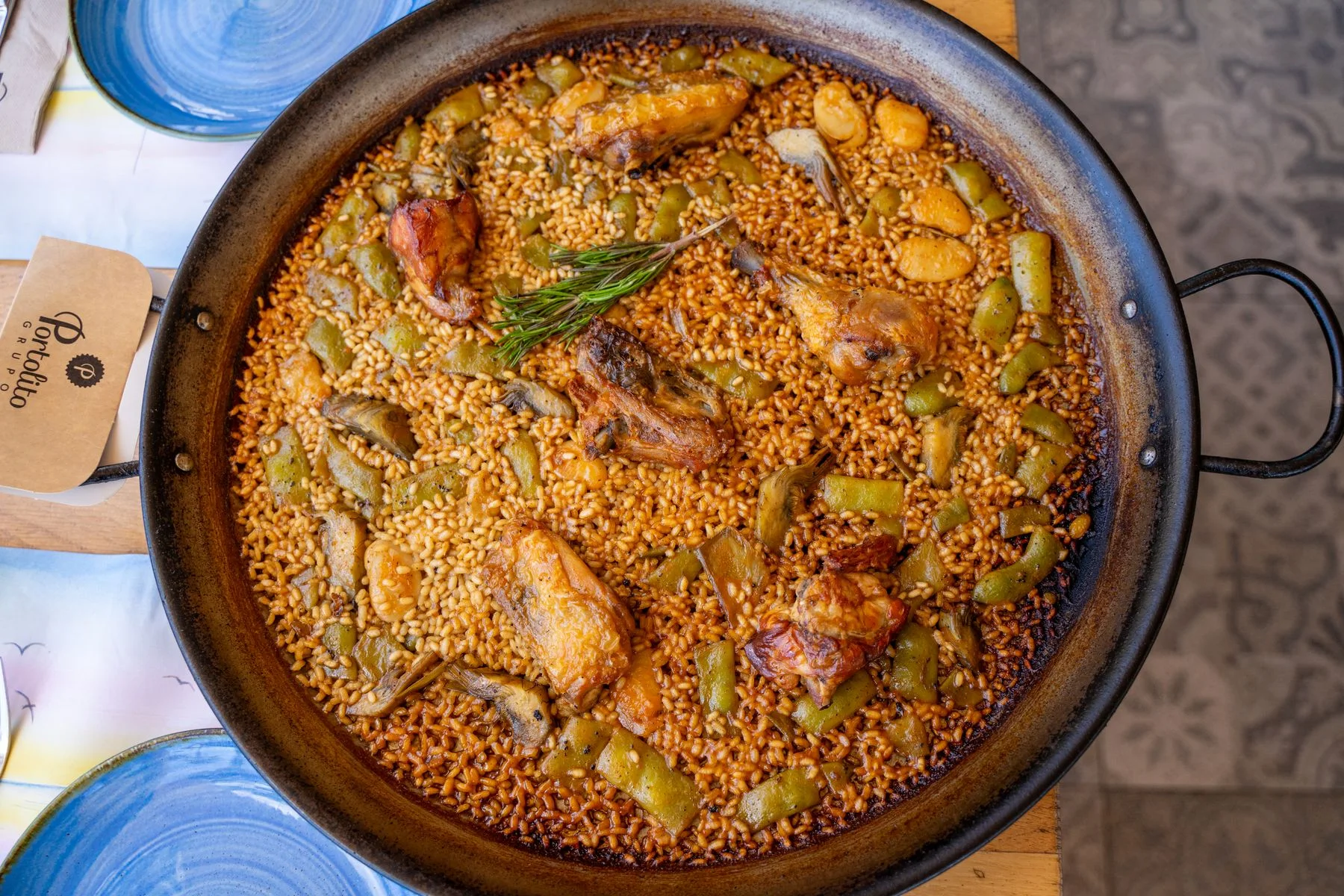
- Valencian paella: dry rice, most commonly with chicken, rabbit and vegetables including green beans and garrofó. Seafood paella is another recipe.
- Arroz a banda: a maritime rice tradition connected with fish stock. Ask how the restaurant presents it.
- Arroz del senyoret: makes prepared seafood easier to eat; confirm ingredients rather than assuming suitability for a particular diet.
- Oven-baked rice: another generally substantial Valencian preparation, rather than rice cooked in a paella pan.
- All i pebre: an l’Albufera-associated stew with eel, potato, garlic and paprika, not a generic sauce.
- Esgarraet: roasted pepper, salt cod and oil. Fish is part of a dish that may look purely vegetable.
- Titaina: Cabanyal cooking combining tomato, pepper and salted tuna called tonyina de sorra, usually with pine nuts.
- Clóchinas: seasonal local mussels. Ask about availability and origin rather than expecting a year-round product.
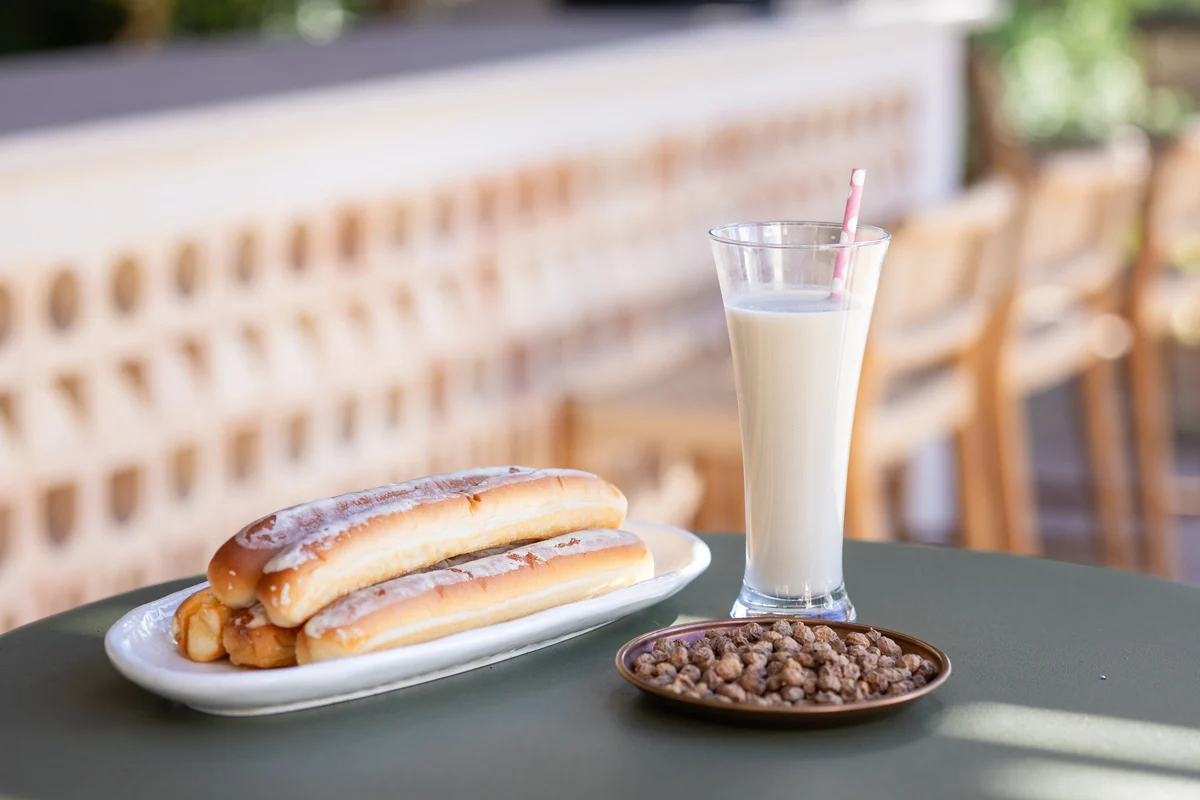
- Horchata with fartons: a tiger-nut drink and elongated pastries for an afternoon break; not a rice drink.
- Pumpkin fritters: especially associated with Fallas, often accompanied by chocolate. Availability can be seasonal.
Almuerzo: a meal between breakfast and lunch
Esmorzaret, or almuerzo, has a role of its own: a sandwich and time to sit, with accompaniments and drink depending on the bar. It is not simply quick toast. Ask about size, filling and what the set offer includes. Cremaet, sometimes served afterwards, uses alcohol in its preparation; do not mistake it for milky coffee.
If rice is planned for lunch, keep almuerzo moderate or try it on another day. Eating two full menus consecutively is not the aim. Read fillings carefully: a vegetable combination can also contain tuna or egg, while other preparations may use stock. Request an explicit adaptation when needed.
Four markets with different roles
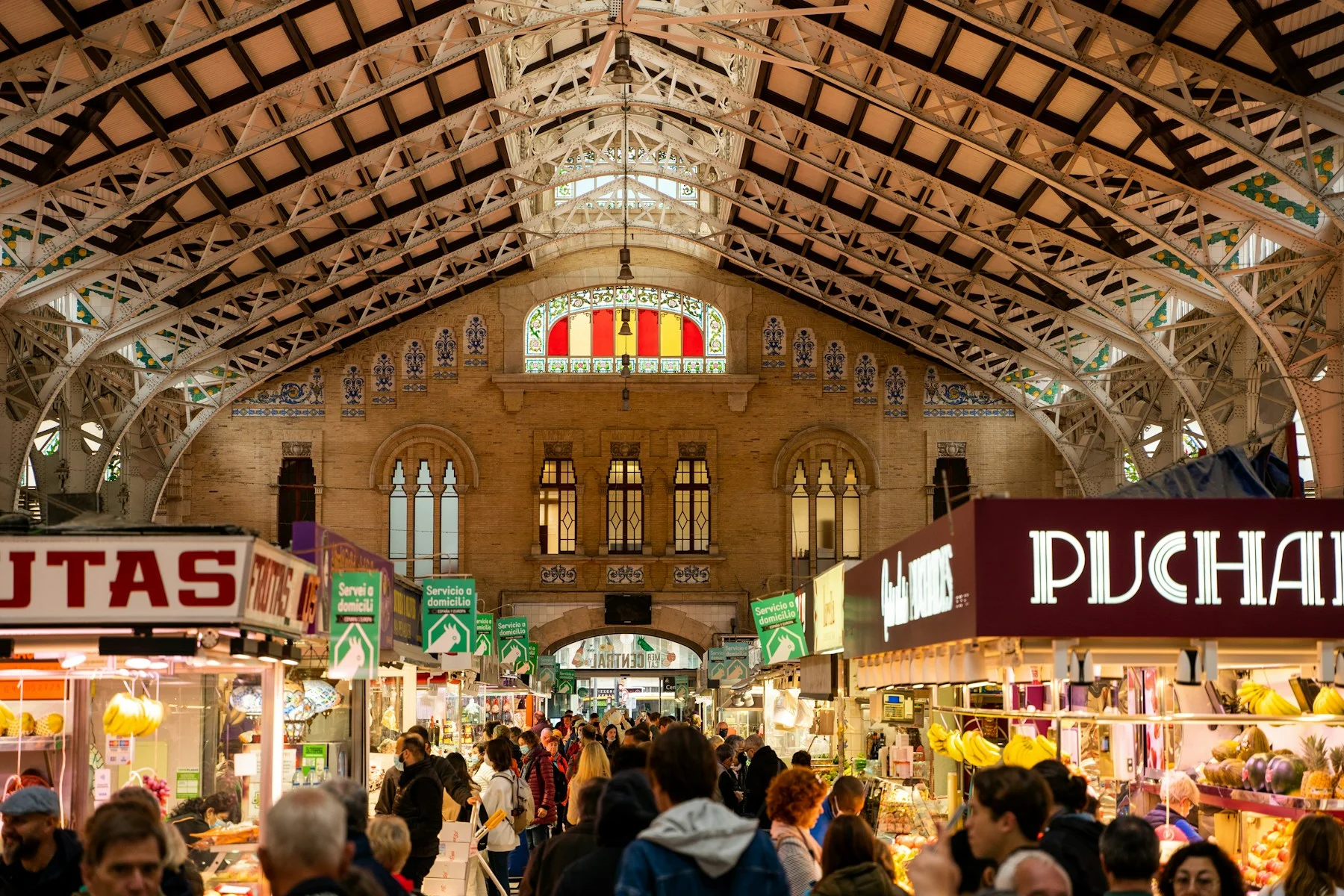
Central Market: food shopping, architecture and fresh produce. Visit during the morning and check its regular Monday-to-Saturday schedule. The market guide combines it with the Silk Exchange while respecting its working purpose.
Russafa: a neighbourhood market around Plaza Barón de Cortes. Compare everyday shopping with surrounding cafés and restaurants without assuming every market stall serves meals.
Cabanyal: a shopping reference in the maritime districts. It gives context to fish and seafaring cooking; combine it with the neighbourhood rather than imagining everything sits on the sand.
Mercado de Colón: an Ensanche Modernista building now focused on food and drink. Suitable for coffee, horchata or a meal depending on the business, but not a substitute for the Central Market's food trading.
Reserve time as well as rice
For paella cooked to order, ask about advance choice, minimum portions and whether pricing is per person. Dry, meloso and brothy rice are different preparations, not quality grades. The setting matters too: centre, coast and El Palmar imply different travel and daily plans. Our paella guide covers those choices.
Do not squeeze a long rice lunch between rigid bookings. Make it the main meal and keep the following block flexible. A lovely setting does not confirm the service you imagine; check table, menu and conditions with the actual restaurant.
A three-day food route without duplicate meals
Day one, centre: morning market, a lunch compatible with more sightseeing, and horchata around Santa Catalina–Plaza de la Reina if you fancy a snack. Day two, coast: Cabanyal walk, two local starters and rice as the main meal, then beach or promenade time without another immediate major reservation. Day three, neighbourhood or farmland: Valencian almuerzo and an Alboraia afternoon to understand tiger-nut growing.
These are editorial combinations, not a package including meals. Replace the coast with El Palmar and rice fields if preferred, but calculate travel. The three-day plan aligns visits and meals within the same area.
Seasonality, allergies and plant-based choices
Offers change with the season. Do not order clóchinas as though all mussels were identical, or expect the same vegetables year-round. For allergies, confirm ingredients, stocks, sauces and cross-contact directly. For plant-based meals, check rice stocks and fish in esgarraet or titaina. Local cooking is still possible, but appearances are insufficient.
Remember dishes through their ingredients: look for roasted pepper and salt cod after esgarraet, recognise paella's garrofó or see dried tiger nuts before ordering horchata. A market connects plate and pantry. To finish an afternoon, the horchata guide offers three settings from centre to farmland.
Frequently asked questions
What can I try besides paella?
Esgarraet, titaina, all i pebre, baked rice, seasonal clóchinas, a sandwich almuerzo and horchata show other sides of the Valencian pantry.
Is esgarraet vegetarian?
The usual preparation includes salt cod with roasted pepper. Confirm any adaptation with the restaurant.
What is tonyina de sorra in titaina?
It is salted tuna used in this maritime preparation, so titaina should not be assumed plant-based.
Does almuerzo mean the main midday meal?
Here it means esmorzaret: a mid-morning meal often centred on a sandwich and accompaniments.
Do all the markets serve the same purpose?
No. Central, Russafa and Cabanyal retain food-market functions, while Colón is now principally a food-and-drink venue.
Does vegetable rice confirm there is no fish?
No. Ask about stock, sauces and preparation. A dish name is not enough for dietary requirements.
Where can I try horchata without travelling to Alboraia?
Santa Catalina and Mercado de Colón fit city walks. Alboraia adds the growing landscape but is not essential for tasting it.