Start with the tiger nut: a tuber
Valencian horchata is made from chufa, a small tuber grown in l’Horta Nord. It is not the rice drink with a similar name found in other countries. Traditional production obtains an extract by grinding and pressing tiger nuts with water, then chills it for serving. Knowing the origin changes the experience: a city snack connects with fields near Alboraia.
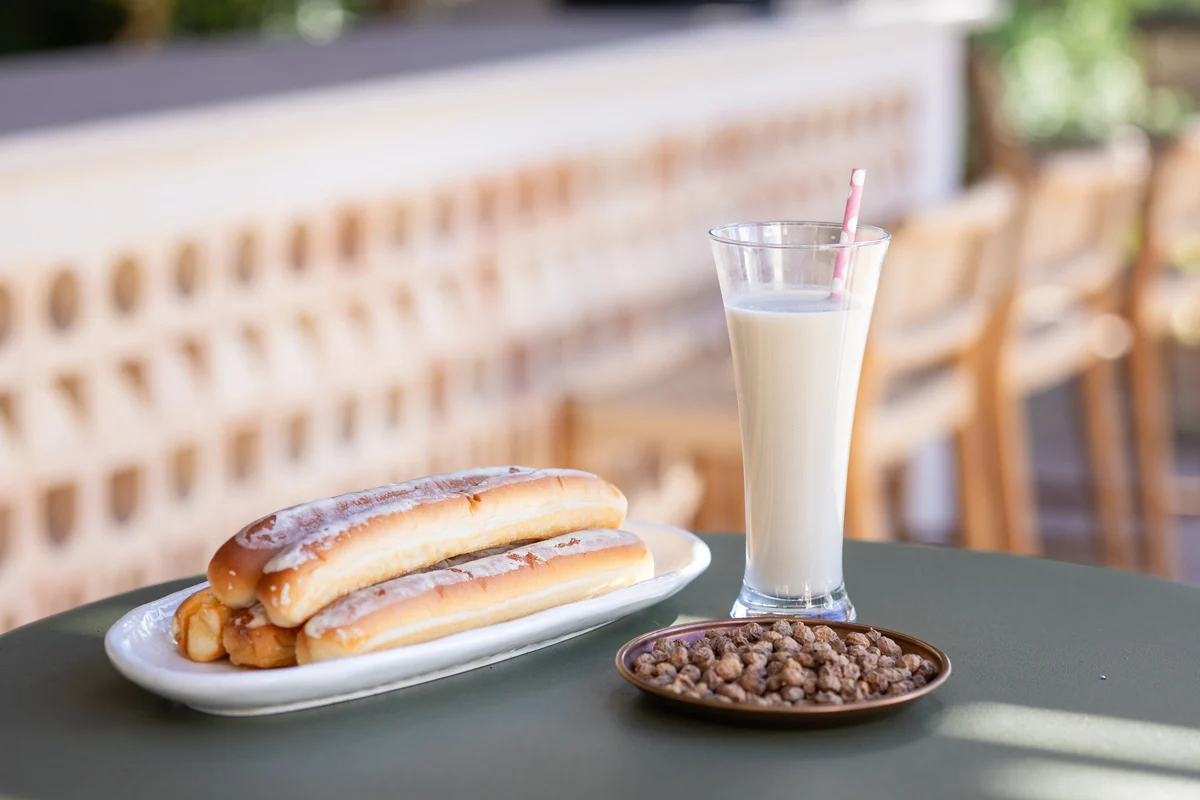
To recognise the link with farmland, begin with dried tiger nuts: these are the tubers used to make the drink through grinding and pressing. The Chufa de Valencia regulatory body explains production and cultivation. Asking a horchatería about the nuts' origin connects your glass with that agricultural work.
Ordering: liquid, slushy or mixed
Choose the format by the texture you want. Liquid horchata is drunk cold, while granizada has an icy consistency that gradually melts. Mixta, where offered, combines both and changes as the frozen portion softens. For a first taste, a small glass lets you compare the tiger-nut flavour with a sweet bite of farton.
A farton is an elongated bun often served alongside and dipped into the drink. Order the amount you want rather than assuming a tray accompanies every glass. Drink and pastries can have different ingredients and allergens. If you need to avoid a specific ingredient, ask about the product, preparation and cross-contact; knowledge about tiger nuts does not cover the whole order.
Option 1: an old-town snack
Santa Catalina fits a walk between the Cathedral, Plaza Redonda and market. Horchatería Santa Catalina lists its premises in the square beside the church. It is a verifiable reference for planning, rather than a “best” ranking. Stop after sightseeing and continue towards Plaza de la Reina without adding a transport journey.
Choose this option when time is short or the snack belongs within your old-town day. If there is a queue, decide whether to spend that time; there is no need to cross all Valencia for a glass. The one-day plan integrates it without displacing major visits.
Option 2: Mercado de Colón and the Ensanche
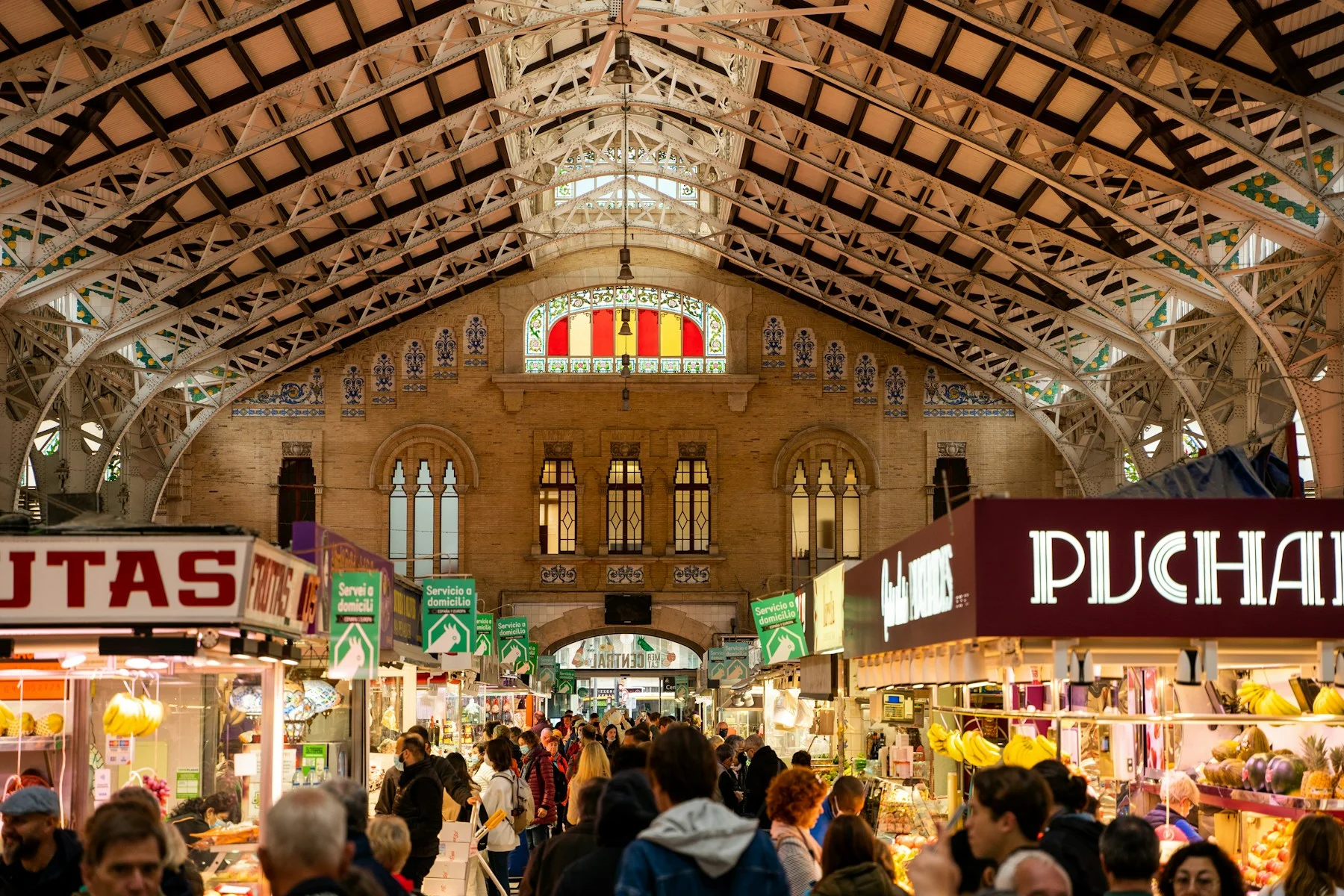
Daniel confirms a branch in Mercado de Colón on Calle Jorge Juan. Here the appeal combines drink and Modernista architecture in a building now focused on food and drink. Do not confuse it with the working Central Market. It can be a break on an Ensanche walk, separate from the old-town morning.
This option fits an Ensanche walk: look at the market's structure and decoration first, then use the snack as a seated break. Santa Catalina is more direct for a Cathedral day; for agricultural scenery, give Alboraia its own outing. Choose around the route you want rather than travelling between several branches.
Option 3: Alboraia and the tiger-nut landscape
For more than a glass, organise an Alboraia outing. Daniel lists Avenida de la Horchata, 41; other horchaterías lie in town or the surrounding farmland. Select the business or activity first, then calculate from your accommodation. Reaching one point in Alboraia does not put every field and venue next door.
The Vía Xurra cycle corridor through l’Horta Nord offers a way to combine agricultural scenery and a snack. Plan the return distance, urban links and heat; completing the entire route is unnecessary. Farm tracks serve active businesses, so respect access, crops and agricultural vehicles. A workshop visit or guided tasting needs its own booking and inclusion checks.
Takeaway: natural does not mean it travels without cooling
Natural horchata is perishable and needs refrigeration. Ask for storage instructions when buying takeaway and plan to drink it soon. A bottle in a backpack through an afternoon of sightseeing is not refrigerated shopping. Dried tiger nuts present different travel logistics, but you need to understand the later preparation.
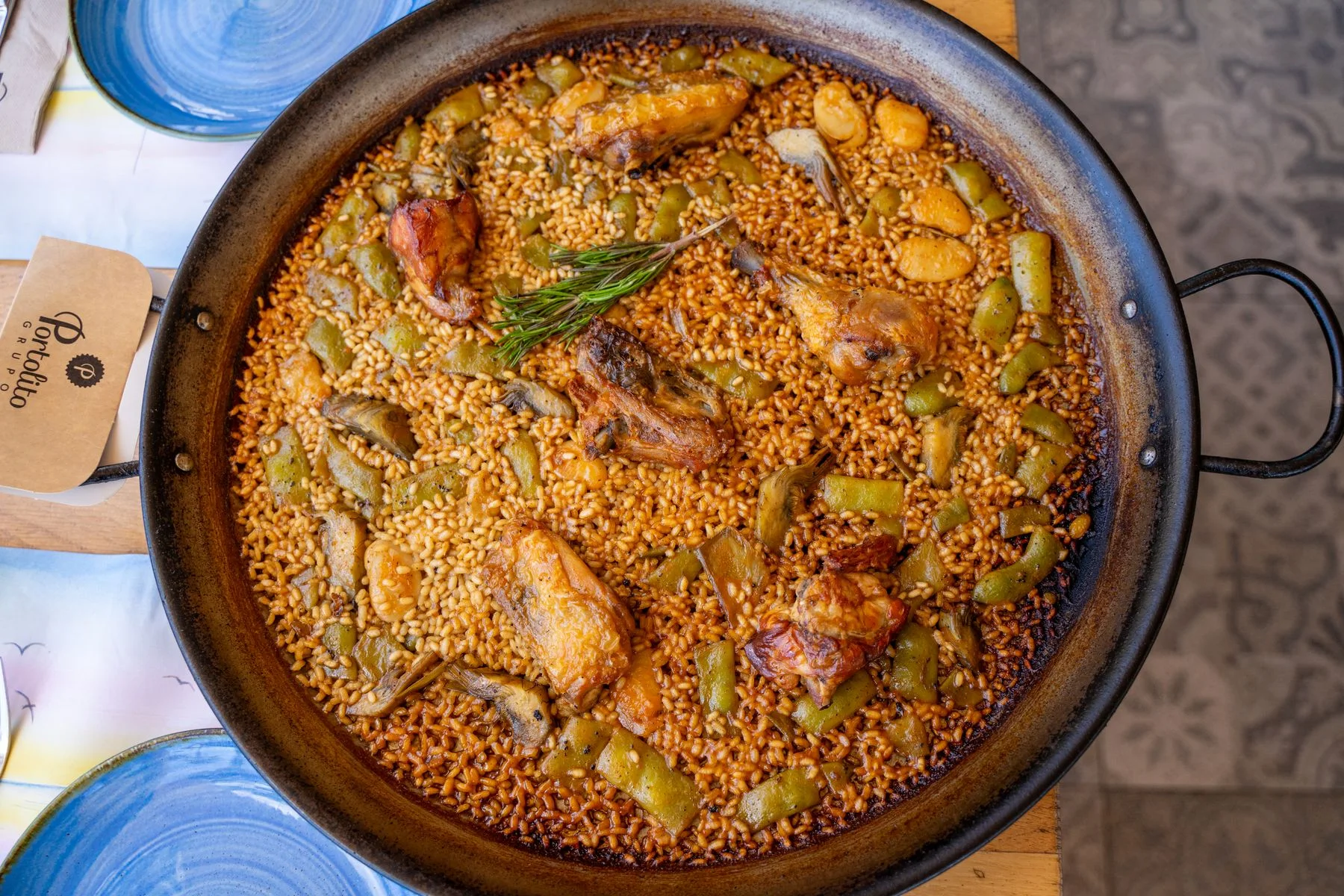
On a short trip, give each meal a setting: lunchtime rice near the sea or l’Albufera, tapas in the centre and horchata during an afternoon walk. In Alboraia, let the snack finish the farmland outing. The food guide brings together dishes to distribute across those moments.
Frequently asked questions
Is Valencian horchata made from rice?
No. It uses chufa, a tuber. It differs from rice drinks with a similar name in other countries.
How do liquid and granizada differ?
Liquid horchata is a chilled drink; granizada has an icy, slushy texture. Mixta combines both where available.
Must I go to Alboraia to try it?
No. Horchaterías exist in the centre and Mercado de Colón. Alboraia adds the agricultural context.
Is a farton always included?
Not necessarily. Check whether it is ordered and charged separately, and ask about its ingredients separately from the drink.
Can I carry natural horchata all day in a backpack?
Do not plan this purchase without cooling. Ask the seller for storage and consumption instructions.
Does a Vía Xurra outing include a workshop visit?
No. Riding the route is different from booking an activity. Workshops, demonstrations and tastings require specific checks.